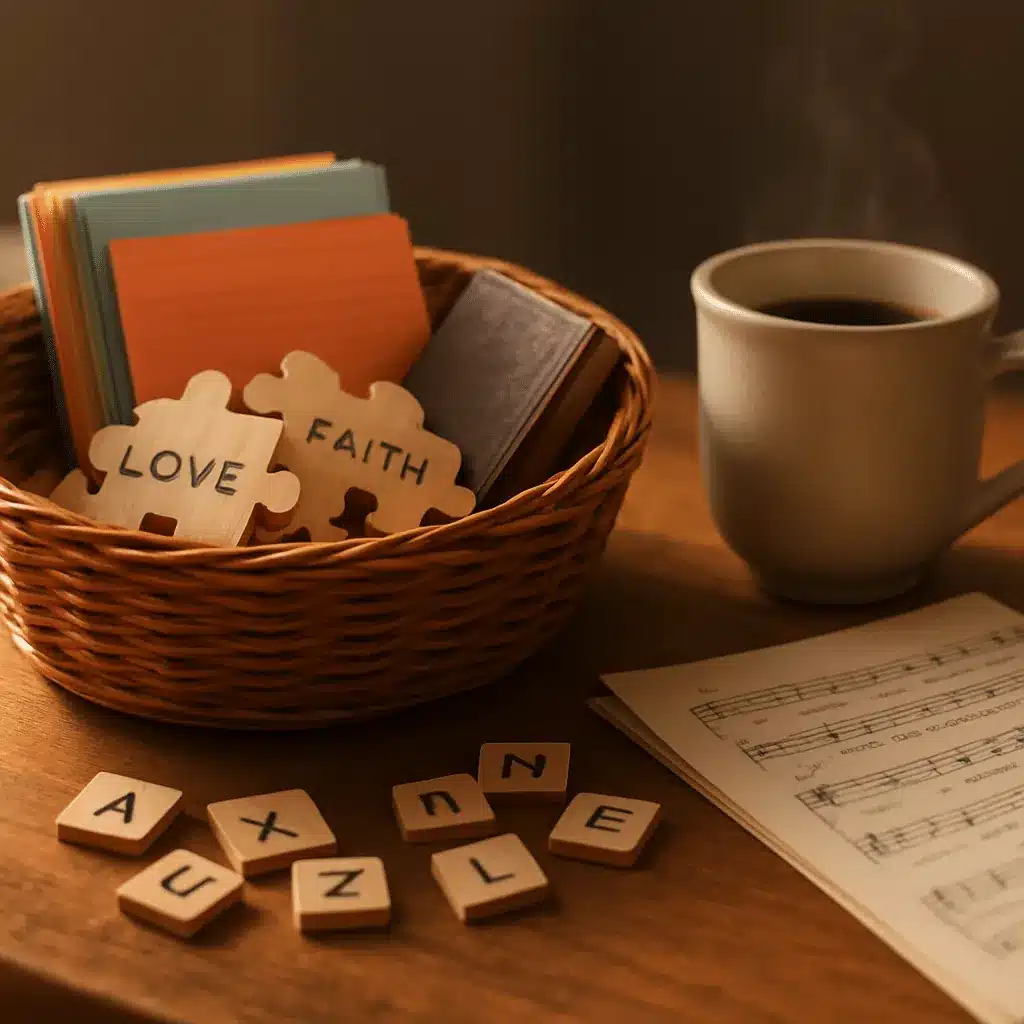
Quiet time is a chance to slow down and anchor the family around Scripture. A Bible verse puzzle basket turns reading and memorization into tactile, playful, and peaceful activity—perfect for morning devotions, bedtime routines, or a Saturday afternoon of calm. Below are practical steps to assemble a versatile basket, puzzle ideas to suit different ages, and suggestions for gentle music tie-ins that complement the fixed radio and music-themed spirit many Christian homes love.
Why a verse puzzle basket works
A puzzle basket combines active learning with quiet focus. Puzzles encourage repetition and pattern recognition—both helpful for memorizing verses—while offering a low-stress, screen-free experience that honors the rhythm of family worship. The basket format invites choice: children and adults can pick a puzzle that matches their mood, energy, and skill level.
Supplies you’ll need
- A small basket or box: sturdy and attractive—something you can leave out as a gentle invitation.
- Index cards or cardstock: for cutting into cards, verse strips, or printable puzzles.
- Blank jigsaw pieces or printable templates: pre-cut wooden or cardboard pieces, or printed jigsaw templates you cut yourself.
- Marker pens, colored pencils, or stamps: for writing verses clearly and adding decorative cues.
- Alphabet tiles or wooden letters: useful for letter-scramble activities and tactile play.
- Small resealable bags or envelopes: to keep puzzle sets together.
- A simple instruction card: one sheet that explains the basket and how to use each puzzle type.
Choose your verses
Start with short, memorable verses for younger children (for example: John 3:16, Psalm 23:1, Philippians 4:13). For older kids and adults, include slightly longer passages and thematic sets (encouragement, love, peace, gratitude). Consider seasonal or Sunday-school-related verses so the basket complements what your family is learning in church.
Puzzle ideas and how to make them
Below are easy-to-make puzzle formats. Store each set in its own envelope or bag, and label with age or difficulty.
1. Verse-scramble cards
- Write a verse on an index card, then cut the card into horizontal strips so each strip has one phrase or clause.
- Mix the strips. Children reassemble the verse in order.
- Tip: number the back lightly for self-checking, or use a matching color dot system for independent work.
2. Jigsaw verse puzzle
- Write a verse across a small sheet of cardstock or glue a printed verse onto thin wood or cardboard.
- Draw jigsaw shapes and cut them apart, or use pre-cut wooden jigsaw pieces and write words or phrases on each piece.
- Puzzlers fit the pieces together to reveal the verse.
3. Fill-in-the-blank cards
- Type or write the verse leaving out key words. For younger children, leave one word out; for older kids, remove several.
- Keep a word bank in the envelope so kids can choose the missing words.
4. Memory-match cards
- Create pairs of cards: one with a phrase from a verse, the other with the following phrase or a matching picture.
- Play memory/concentration by turning cards face-down and finding pairs in sequence to reconstruct the verse.
5. Word search or crossword
- Use a simple word-search generator or hand-draw a small crossword that contains keywords from a verse.
- Provide a printed copy and pencil in the basket for quiet, focused discovery.
Ways to use the basket during family quiet time
- Daily verse pick: Each person takes a puzzle for the day—complete it quietly, then share one sentence about what the verse meant to them.
- Family puzzle circle: Sit together; each person completes a piece and then reads their part aloud so the family reconstructs the verse in a calm, communal rhythm.
- One-on-one time: Use the basket for short parent-child devotionals—one or two puzzles that naturally lead to a simple prayer.
Music-themed tie-ins
Because your site focuses on faith and music, add gentle musical elements to deepen the experience without turning it into screen time. Suggestions:
- Include a small card suggesting a hymn or worship chorus that echoes the verse theme. Play a soft instrumental version on your home radio or a piano while puzzling.
- Turn short verses into a simple chant or melody that kids can hum as they assemble puzzle pieces—this helps memorization through rhythm.
- For older kids, encourage creating a two-line chorus from a verse and singing it together after completion.
Age-appropriate adjustments
- Toddlers (2–4): Use picture cues and one-phrase verses. Keep pieces large and few.
- Early readers (5–7): Short sentence strips, simple fill-in-the-blanks, and jigsaws with fewer pieces.
- Preteens and teens: Use longer passages, crosswords, and challenges such as reconstructing verses from paraphrase.
- Adults: Encourage reflective prompts with each verse: a question card that invites application or prayer.
Storage, rotation, and maintenance
Keep the basket visible but tidy. Rotate verses monthly or tie them to your church calendar. Laminate frequently used cards for durability and replace paper pieces as they wear. Label envelopes clearly and keep a small pencil sharpener and extra pens in the basket so it’s ready whenever the family reaches for it.
Closing tips
Start small—three to five puzzle sets is enough to begin. Let the basket be an invitation rather than a chore: encourage curiosity, celebrate small victories, and use the puzzles as a springboard into prayer and conversation. Over time, you’ll find the basket becomes a beloved ritual that helps Scripture stick in joyful, peaceful ways.