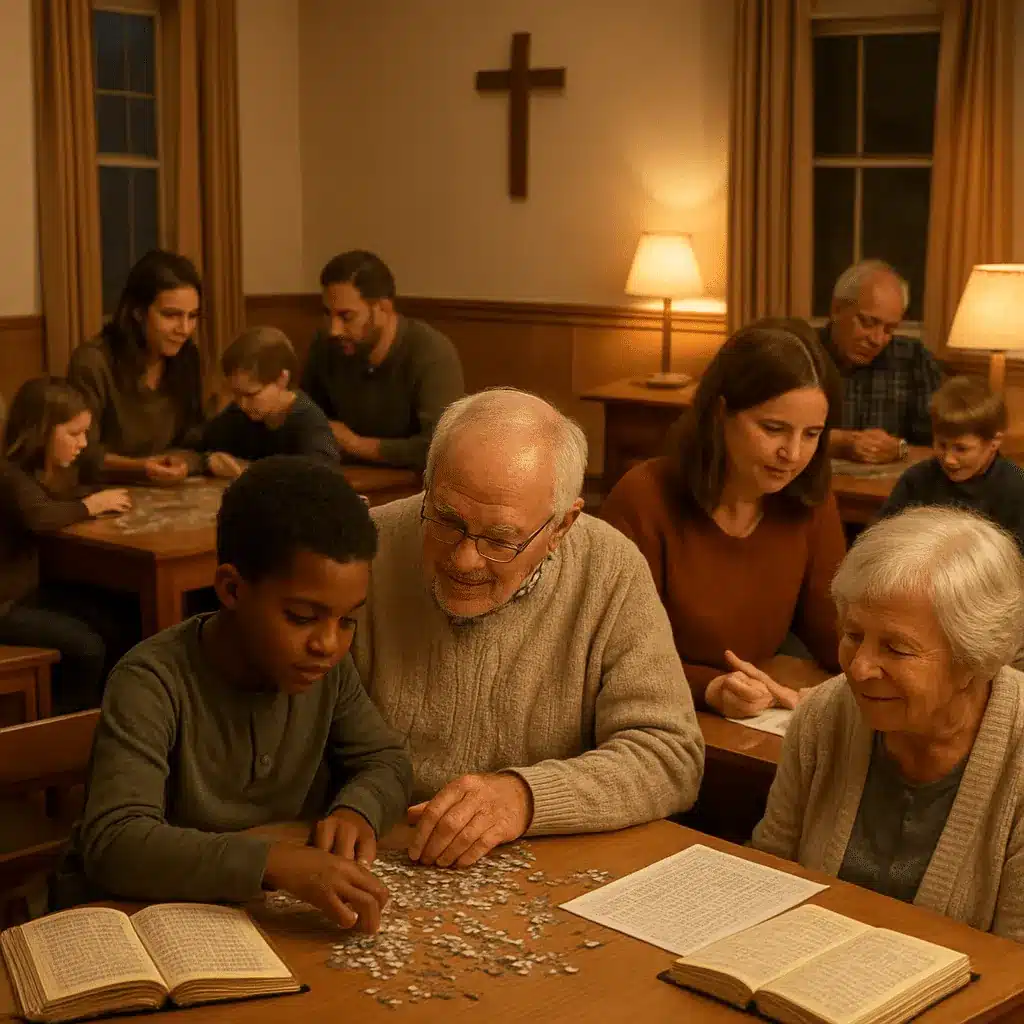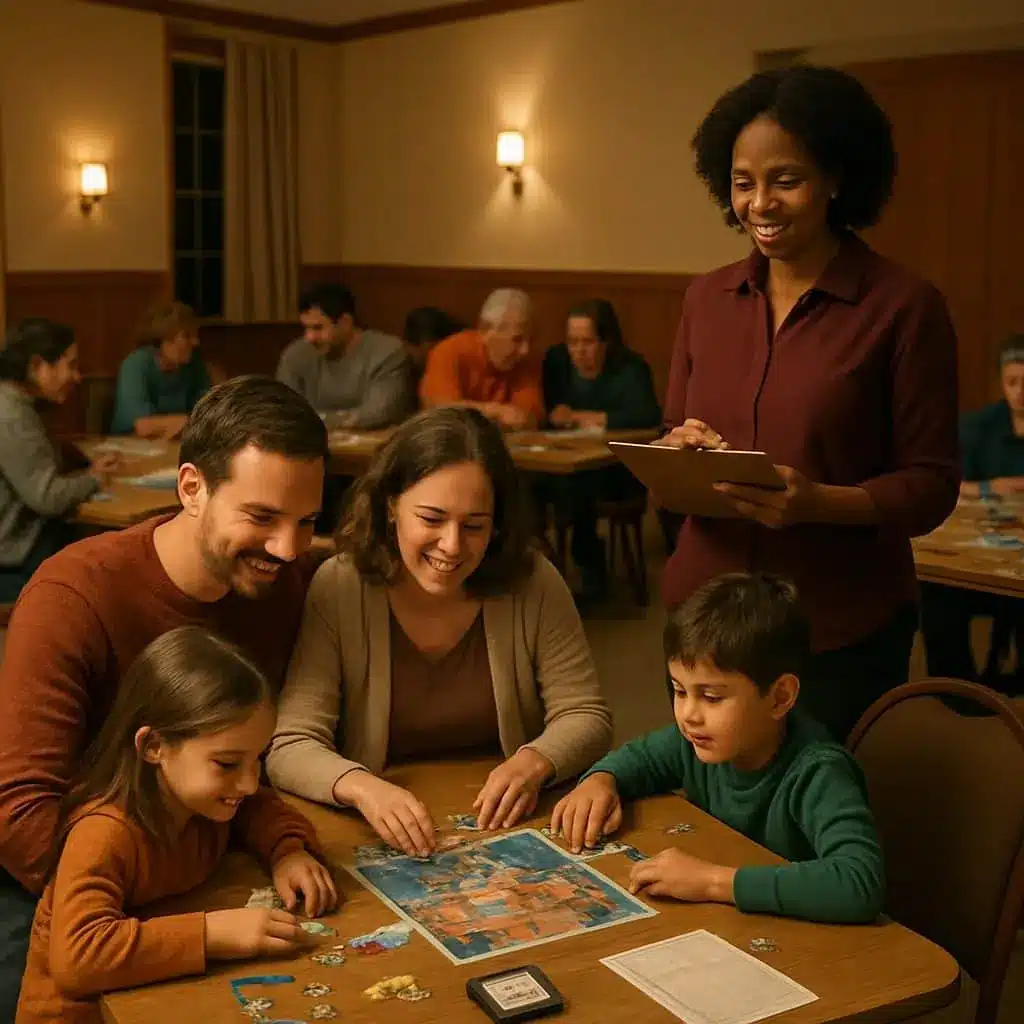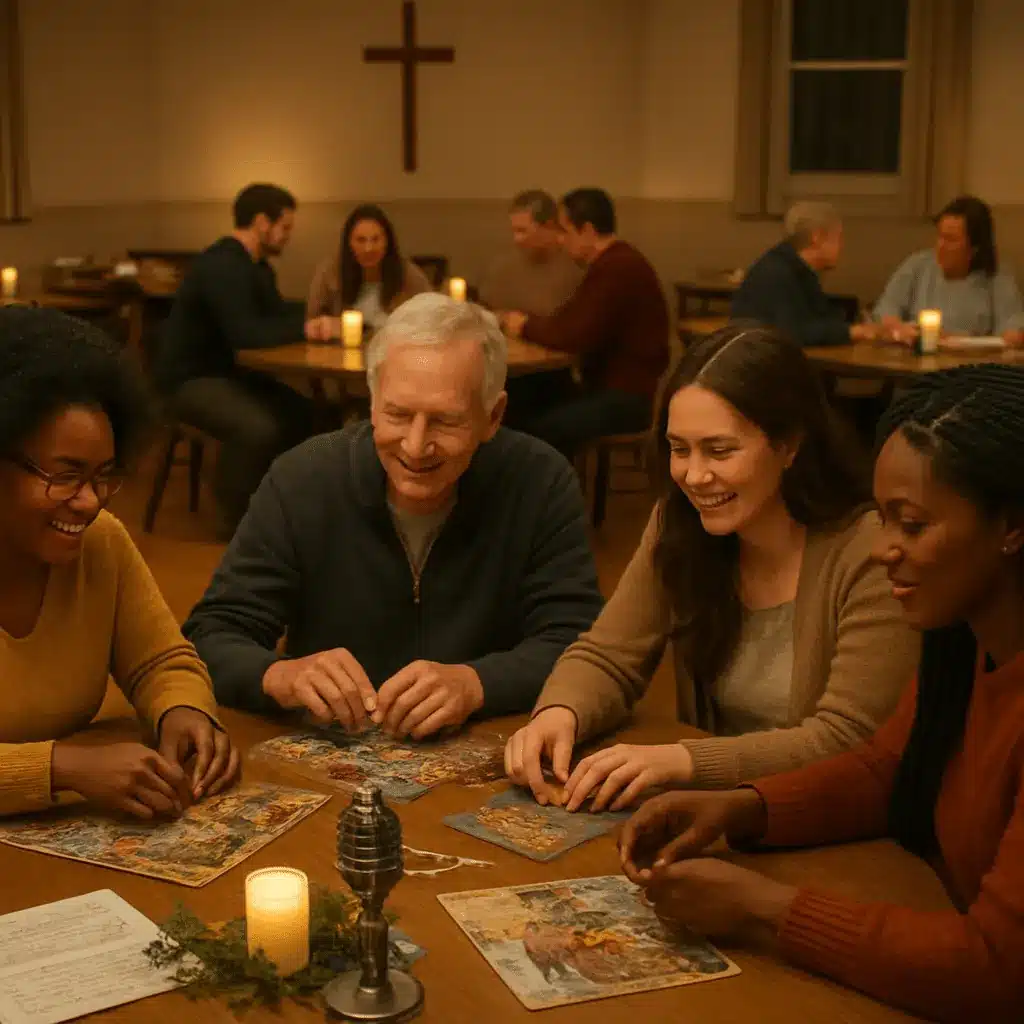
Looking for a fresh, calm, screen-free activity that brings your congregation or family together? A church puzzle night built around Bible stories and music-themed word games blends fellowship, faith formation, and gentle fun. This guide walks you through planning, station ideas, materials, timing, and variations so your group leaves encouraged and connected.
Why a puzzle night works for churches
Puzzle nights encourage conversation, cooperative problem-solving, and reflection without the pressure of competition or high-energy games. Using Bible stories and music themes adds spiritual depth: participants revisit Scripture and hymnody in creative ways that engage different ages and learning styles.
Before the event: planning and materials
Decide whether you want a single-session event or several short stations that groups rotate through. Stations work well for varied ages and attention spans.
Suggested materials
- Printed Bible story images (large, high-contrast) laminated if possible
- Pre-cut jigsaw puzzles made from those images (you can mount images on thin cardboard and cut into pieces)
- Large easel pads or whiteboards for word puzzles
- Index cards, markers, and pencils
- Small table decorations (candles in glass jars or battery candles for calm lighting)
- Simple hymn lyric sheets or chorus cards: familiar, short hymns work best
- A tabletop “radio” prop (old microphone or cardboard cutout) for a music-themed station
- Timer or bell for gentle transitions
Structure: timing and flow
Here’s a simple 90-minute plan for a mid-sized church group. Adjust for your schedule.
- Welcome and brief prayer (10 minutes)
- Station rotations: three 20-minute rounds with 5-minute transitions (65 minutes)
- Group wrap-up and optional communal hymn or blessing (15 minutes)
For smaller groups, run two 25-minute rounds and save time for sharing reflections.
Station ideas: Bible story puzzles and music-themed challenges
Create four to six stations and label them with simple headings. Rotate groups of 4–8 people.
1. Bible Jigsaw Station
- Use laminated images of Bible scenes (Noah’s Ark, Feeding of the 5,000, Good Samaritan, etc.).
- Provide pre-cut puzzles at varying difficulty: 12–24 pieces for kids, 48 pieces for adults.
- Include a short Scripture reference and a reflection prompt on the table: “How does this story invite us to show compassion?”
2. Story Scramble: Bible Verse Word Game
- Write a familiar short verse on the board, then scramble key words on index cards.
- Teams reassemble the verse in order. Offer a hint by reading the verse’s theme (e.g., trust, love).
- Variation: use partial verses and ask groups to finish the line from memory.
3. Hymn Word Match
- Provide short lyric cards from beloved hymns and a bank of keywords (grace, mercy, light, praise).
- Groups match keywords to the hymn lines and talk briefly about why those words matter to their faith.
- Calm option: play gentle instrumental hymn recordings quietly in the background to set a reflective mood.
4. Radio Relay: Music-Themed Word Puzzles
- Create a “radio” table with a microphone prop and printed clues about songs, hymn titles, or worship themes.
- Games can include word searches with hymn titles, crosswords built around music terms (chorus, verse, refrain), or a ‘name-that-hymn’ whispered relay where participants give one-word clues.
- Keep the tone cooperative: the goal is to assemble a playlist of songs that reflect the evening’s theme.
5. Quiet Reflection & Coloring: Family-Friendly Station
- Offer printable coloring pages of simple Bible art or musical motifs for younger children and those who prefer low stimulation.
- Supply crayons and calm prompts like “Draw a place where you feel God’s peace.”
Facilitation tips for a calm, inclusive night
- Set expectations: Start with a brief prayer and explain the cooperative focus—this is not a high-stakes contest.
- Mix ages: Arrange groups so older youth and adults sit with children to encourage mentorship and intergenerational conversation.
- Provide prompts: Each station should include a 1–2 sentence reflection question to connect the activity to faith.
- Accessibility: Use large print and high-contrast images. Offer alternative activities for limited mobility (e.g., read-aloud station).
- Keep transitions gentle: Use a bell or soft chime to signal rotation instead of loud signals.
Wrapping up: reflection and simple takeaways
End the night with an optional group sharing: invite one or two people from each table to share a quick insight or joy from the evening. Close with a short hymn or a blessing. Consider giving families a simple take-home puzzle sheet—an acrostic prayer or a mini word search based on the evening’s theme—to extend the reflection at home.
Variations for holidays and special occasions
- Advent: focus on nativity scenes and carol-themed puzzles. Include an Advent reading station.
- Lent/Easter: use cross and resurrection imagery and reflection prompts on repentance and renewal.
- Children’s ministry night: lengthen the hymn station into a simple sing-along with call-and-response lyric puzzles.
A calm, faith-centered puzzle night combines gentle fellowship, Scripture engagement, and music in ways that are accessible to many ages. With modest supplies and a focus on cooperation, your church can host an evening that strengthens relationships, encourages reflection, and provides a welcome screen-free space for spiritual formation.