
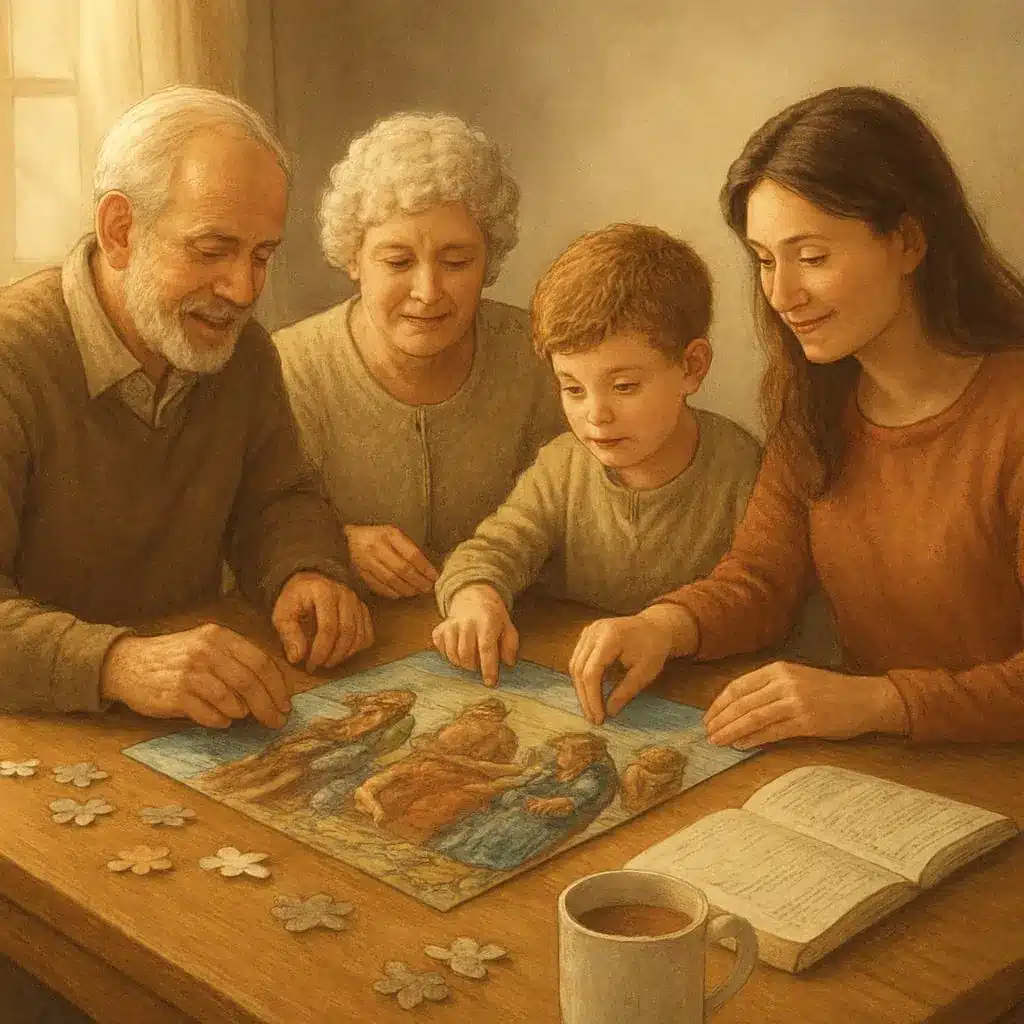
Why use faith-inspired puzzles?
Puzzles designed around Bible stories, verses, hymns, and music themes are more than quiet entertainment. They can gently strengthen memory, encourage conversation about faith, and create calm, screen-free time for families and congregations. Used intentionally, puzzles support devotional rhythms, multi-generational connection, and hands-on learning that complements Bible reading and worship.
Popular types of faith-inspired puzzles
Choose a puzzle type that fits your group size, age range, and time available. Below are practical options and where they work best.
Bible story jigsaws
- Full-image jigsaw puzzles showing a Bible scene (suitable for family tables or church study rooms).
- Progressive jigsaws with numbered segments that reveal a verse or image as pieces are added—great for short devotion times.
Verse puzzles
- Cut-apart scripture strips to reorder into the correct verse—ideal for memory practice and younger learners.
- Fill-in-the-blank verse sheets for discussion and reflection.
Word searches, crosswords, and cryptograms
- Music- and hymn-themed word searches for radio listeners or family music nights.
- Crosswords that explore biblical vocabulary and church history terms—good for teens and adults.
Picture matching and tactile puzzles
- Matching cards with story prompts for preschoolers.
- Tactile puzzles (wooden pieces, large-print cards) for accessibility and hands-on engagement.
Quick setup tips
- Pick a clear goal. Decide whether the activity is for devotion, education, quiet time, or fellowship. The goal guides the puzzle choice and timing.
- Prepare materials ahead. Pre-print word searches or cut verse strips so families or volunteers can start quickly. You can point people to Bible story puzzles and printables for ready-made options.
- Designate a calm space. A single table with soft lighting and hymn background music helps focus. For family nights, rotate table roles like “piece sorter” and “verse reader.”
- Time it. Short, 10–20 minute puzzle blocks work well between other activities or as part of a family devotion. For church events, plan 30–60 minute sessions depending on complexity.
- Include a reflective moment. Pause after solving to read the scripture aloud, sing a short chorus, or invite a one-sentence takeaway.
Age-appropriate ideas
- Preschool: Large-piece picture puzzles and matching cards with simple story prompts and sensory textures.
- Elementary: Verse reorder puzzles, basic crosswords, and illustrated jigsaws tied to a Bible story.
- Teens: Challenging crosswords, cryptograms, and themed team competitions that include scripture reflection.
- Adults and seniors: Complex jigsaws, long-form crosswords, and tactile or large-print materials for accessibility.
Accessibility and inclusivity
Make puzzles welcoming to all by adopting a few simple measures:
- Provide large-print and high-contrast versions of printables for those with visual needs.
- Offer tactile pieces or laminated cards for hands-on handling and durability.
- Include an audio option: read clues or verses aloud for participants who benefit from listening.
- Mix ages on teams so abilities complement each other; assign roles that play to strengths (reader, sorter, piece-fitter).
How to use puzzles in family devotions and music nights
Puzzles can be woven into daily or weekly rhythms. Start with a short prayer, set a soft hymn as background music, and use a verse puzzle as the devotional anchor. After solving, invite family members to share one thing they noticed in the verse, line of the hymn, or story image. For step-by-step family plans and music-centered ideas, see our family puzzle night plans with faith and music themes.
Facilitating church group puzzle nights
Group puzzle nights can be fellowship, outreach, or fundraising events. Keep facilitation simple:
- Divide into mixed-age teams to promote mentoring and conversation.
- Use rounds: quick warm-up puzzles, a main challenge, and a reflective wrap-up reading or hymn sing.
- Offer low-cost, faith-themed prizes like scripture cards or hymn lyric booklets.
- Provide clear instructions and visible timers for friendly competition.
For detailed formats, volunteer roles, and sample schedules for congregational events, consult church group puzzle night ideas.
Using puzzles for outreach and radio-friendly content
Radio ministries and community outreach can use puzzles to extend engagement off-air. Ideas include:
- Feature a weekly puzzle segment that prompts listeners to visit your website for a printable.
- Encourage listener submissions of theme suggestions (favorite hymns, stories) to inspire upcoming puzzles.
- Share solved examples and short reflections on air to invite listener participation and prayer requests.
Calm, screen-free patterns for daily devotion
Puzzles are particularly suited to quiet routines. Keep a small puzzle basket or printable packet available for morning devotions, bedtime reflections, or waiting-room hospitality. For gentle, screen-free options that pair well with reading and prayer, see our collection of calm screen-free puzzle activities.
Final practical checklist
- Choose a clear spiritual or social goal for your puzzle time.
- Pick age-appropriate materials and prepare them in advance.
- Create an inviting, accessible space with optional background music.
- Include a short reflection or prayer after solving to connect the activity to faith formation.
- Rotate roles and involve multiple generations whenever possible.
Puzzles are simple to run, adaptable to any group size, and effective at creating quiet moments of connection around Scripture and song. Start small—one short puzzle with a verse or hymn—and expand as your family or congregation discovers what fits your rhythm and needs.