
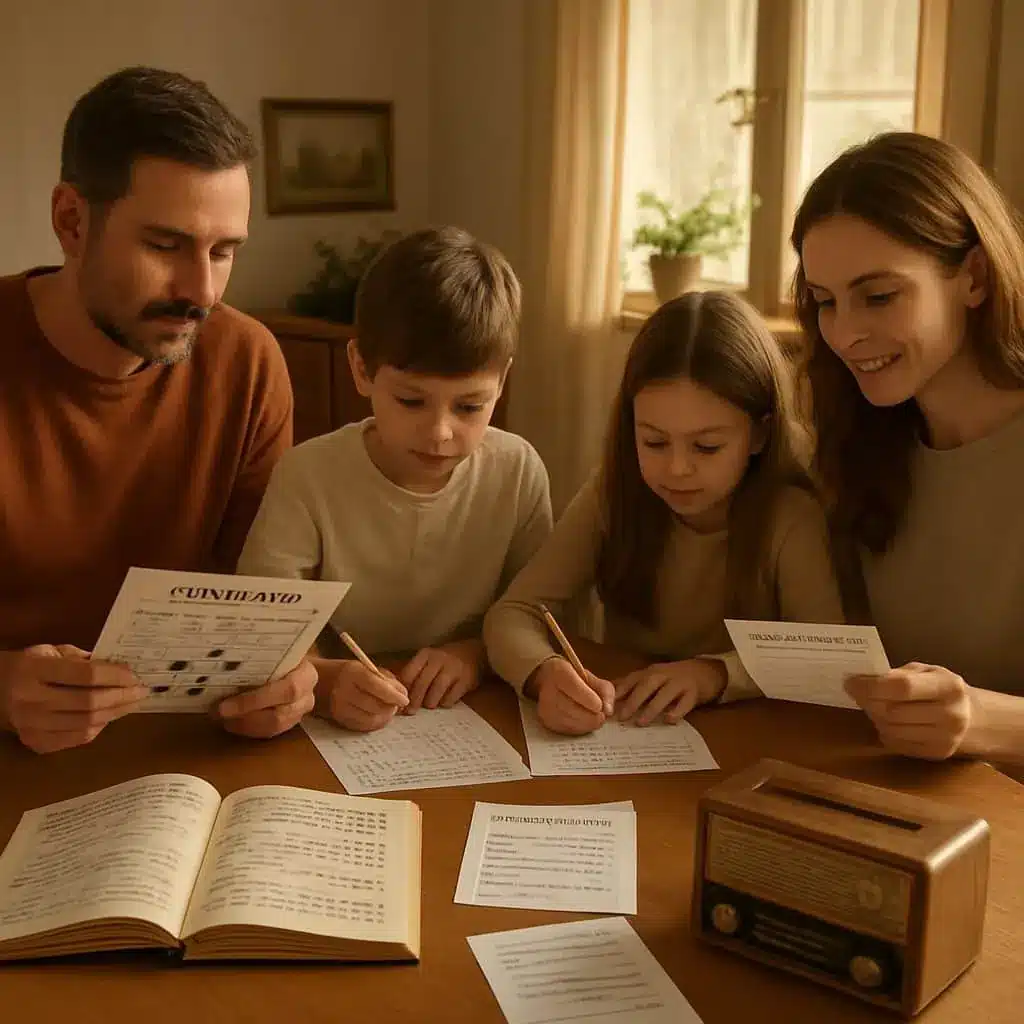
Music- and radio-themed word puzzles are an engaging, screen-free way to bring families, church groups, and radio listeners together. This guide gives you ready-to-print templates, word lists, and facilitation tips for crosswords, wordsearches, and lyric games. It also explains safe approaches to lyric-based activities so you can play in ways that respect copyright.
What this page includes
- Printable-ready puzzle templates and word lists you can paste into any free puzzle generator.
- Lyric-based game formats that avoid copyright issues or point you to lawful options.
- Practical run-sheet ideas for family nights, church groups, and radio station fundraisers.
Ready-to-print puzzle templates
Crossword: Hymn & radio vocabulary (medium)
Use these answers and clues to build a crossword grid (10×10 recommended). Paste the answer words into a crossword maker or draw a grid by hand.
- Answers (10): CHOIR, HYMN, REFRAIN, SOLO, DUET, RADIO, FREQUENCY, SPONSOR, ANTHEM, STATION
- Clues:
- Group that sings in worship (CHOIR)
- A traditional worship song (HYMN)
- Repeated line or section of a song (REFRAIN)
- One singer alone (SOLO)
- Two singers together (DUET)
- Device that broadcasts music and messages (RADIO)
- Measures how signals are transmitted (FREQUENCY)
- Organization supporting a program financially (SPONSOR)
- A patriotic or praise song (ANTHEM)
- Broadcasting outlet (STATION)
Tip: For younger players, remove the longer words and simplify clues (e.g., “sings in church” for CHOIR).
Wordsearch: Radio history & music terms (easy to hard)
Choose a difficulty level and paste one of these word lists into a wordsearch generator. Provide a blank grid for manual printing or use an online creator to generate a PDF.
- Easy: MUSIC, SING, SONG, BAND, LIVE, TUNE, BEAT
- Medium: BROADCAST, VINTAGE, MICROPHONE, AIRWAVE, HOST, FORMAT
- Hard: AMPLIFIER, TRANSMITTER, FREQUENCY, SPONSOR, RESONANCE
Lyric-scramble & title games (copyright-safe options)
Lyric games are crowd-pleasers, but song text is typically protected. Use these formats to stay respectful of copyright:
- Title Scramble: Provide scrambled song or hymn titles (safe to use titles). Example: “MZAIANG RGACE” → Amazing Grace. Use public-domain hymn titles or obtain permission for modern titles if you’ll display full lines.
- First-Word Relay (public-domain or original): Use only public-domain hymns (e.g., many 19th-century hymns) or original worship lines written by your team. Ask teams to reorder shuffled first words to reconstruct the line.
- Lyric Paraphrase Quiz: Give short paraphrases of themes or images from songs rather than quoting lyrics; players name the song or hymn. This avoids reproducing the original text and still tests music knowledge.
- Hum & Guess (performer-led): A leader hums a short, non-verbatim melody or plays an instrumental ringtone snippet licensed for performance; others guess the title. If you’ll use recorded clips, follow your venue’s or station’s licensing rules.
How to run lyric-based games without infringing copyright
- Prefer public-domain material. Many classic hymns and older songs are public domain; you may reproduce titles and full lyrics for those freely. When in doubt, check the copyright status before printing full lines.
- Use titles, not full lyrics. Song titles are typically usable for identification games. Avoid printing or projecting lyrics from copyrighted songs unless you have permission or a proper license.
- Create original lines. Write short, hymn-style phrases your group can sing. These have no third-party copyright and are ideal for lyric-scramble or fill-in-the-blank activities.
- Get permission for modern songs. If you want to use recent worship songs or commercial music, seek permission from the publisher or use your church/station’s blanket licenses where applicable. When in doubt, consult your legal advisor.
- Keep snippets minimal and transformative. Short quotations may still be restricted; transformation (paraphrase, commentary, or teaching) is safer than reproduction. Err on the side of caution for public printing.
Event-ready facilitation tips
- Print answer keys on a separate sheet and provide pencils and clipboards for easy play.
- Offer three difficulty levels at the same session so families with varied ages can play together.
- Use timed rounds for competitive fun (5–10 minutes per puzzle) and play bonus rounds like Title Scramble for tie-breakers.
- Pair puzzles with short recordings or a themed playlist; for radio events, schedule puzzle rounds between live segments to keep listeners engaged.
- For family or small-group events, consider combining puzzles with a sing-along using public-domain hymns. You can also include music puzzles in your family puzzle night alongside a simple playlist.
For younger children, direct them to simpler pages in your printable kits — for example, link to kid-friendly music puzzle pages that use pictures, short word lists, and coloring elements.
Using puzzles for fundraising and outreach
Puzzles translate well into fundraising: ticketed puzzle nights, sponsored crossword contests, or pay-to-play online versions promoted by a station or church. Combine a radio broadcast with a live puzzle final round or offer printed puzzle booklets for sale. See community-specific ideas for combining puzzles and giving events at radio-themed fundraising ideas.
Final steps: print, test, and enjoy
To create your first printable: paste a selected word list above into a free crossword or wordsearch generator, export a PDF, and print a test copy. Use heavier paper or cardstock for community events, prepare an answer key, and run a short practice round so everyone knows the rules. With simple preparation, music themed word puzzles become a peaceful, inclusive activity that complements worship, family fun, and radio community-building.
Want more templates and seasonal ideas? Bookmark this page and try one puzzle type at your next meeting — the group’s favorite will suggest your next printable pack.